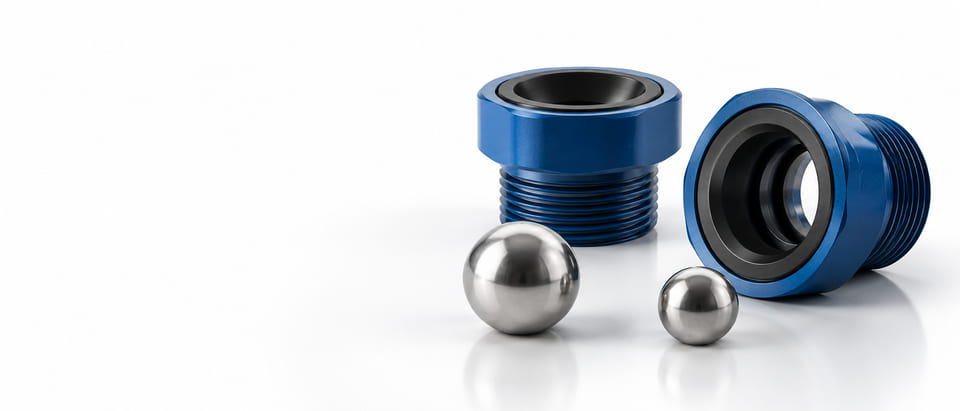
A metering-pump problem is easier to investigate when the evidence survives the first repair attempt. Record the symptom, preserve the component history and separate a ball enquiry from model-specific equipment maintenance.
Quick Answer: How Should Metering-Pump Check Ball Leakage Be Investigated?
Identify the pump model, symptom and duty, then evaluate the complete ball-and-seat arrangement alongside fluid, contamination, installation and system conditions. Follow the manufacturer’s authorized maintenance procedures. Preserve as-found evidence and verify the relevant output or leakage result under defined conditions; neither a same-size replacement nor a successful short run proves the original cause.
MEITUO Balls can use these questions to review a defined component enquiry. Begin with the relevant product or application guide, then identify the conditions that your drawing does not yet resolve.
Which Symptoms Actually Point Toward a Metering-Pump Check Valve?
Reduced delivery, loss of prime, unstable output or apparent backflow can justify investigating a pump's check-valve arrangement. They do not prove that the ball itself is defective. Record the operating state, timing and process conditions before changing parts so the investigation begins with evidence rather than a preferred replacement material.
Distinguish an internal check-valve problem from leakage elsewhere in the pump or piping. A diaphragm, connection, suction condition or other component may produce a related symptom. Use the specific equipment manual and the responsible maintenance procedure to determine the appropriate diagnostic route. The exact construction and service requirements vary by pump model.
Describe when the problem occurs. A unit that works after priming but fails after a long stop presents a different question from one that deteriorates during a particular recipe. Note fluid identity, concentration, temperature, viscosity where relevant, suction and discharge conditions, operating setting and recent maintenance. Preserve alarms and measured output rather than relying only on an operator's summary that the pump is weak.
Work on chemical equipment belongs to appropriately authorized personnel using the manufacturer's isolation, depressurization and handling instructions. Do not use a generic blog checklist as a reason to open a live or unverified system. The useful procurement result is an accurate description of the suspected component and the evidence needed to resolve it.
| Observed symptom | Question to investigate | Do not assume |
|---|---|---|
| Loss of prime | Suction, gas, valve and installation conditions | A new ball is the only remedy |
| Low delivery | Actual duty, settings and complete liquid end | Rated output equals measured output |
| Leakage or backflow | Location, direction and pressure condition | All leakage originates at the sphere |
Check Ball vs Seat vs System: How Should Causes Be Separated?
A ball closes against a seat within an assembly. Its surface, dimensions and movement matter, but so do the seat, guides, seals, orientation and fluid condition. A particle at the interface can prevent closure even if both parts were acceptable when manufactured. A damaged or incorrectly installed assembly can produce another result entirely.
Build a cause map before purchasing parts. Separate potential component damage, contamination, fluid effects and system conditions. Each branch needs an observation or test that can support or weaken the hypothesis. Avoid replacing several variables at once if the aim is to identify which one caused the problem.
A controlled replacement may help the investigation when permitted by the equipment procedure. Document whether only a ball, a paired element or the complete valve assembly changed. If a complete replacement restores delivery, the result supports that replacement under those conditions; it does not prove which internal feature was responsible. Keep that distinction in the maintenance and supplier record.
The sourcing description must follow the approved service scope. Some arrangements are intended to be replaced as complete assemblies, while others have an authorized component-replacement procedure. A loose-ball quote should not bypass a required valve or liquid-end kit. Confirm the model, part reference and permitted maintenance approach before asking a sphere supplier to reproduce an unknown part.
| Hypothesis | Evidence to retain | Comparison control |
|---|---|---|
| Ball damage | Identity, surface and dimensions | Same seat and approved method |
| Seat or assembly issue | Seat condition and installation record | Correct complete configuration |
| Contamination or fluid effect | Residues, recipe and exposure history | Defined preparation and fluid conditions |
What Should Inspection of the Ball-and-Seat Pair Record?
Preserve part identity and history before inspection. Record the pump model, assembly reference, maintenance date and location of the removed parts. If several similar valves or balls are present, keep them separate so the observed condition can be traced to the relevant service position. Mixing parts can destroy the most useful evidence in the investigation.
Inspect using an agreed method and preparation. Surface scratches, deposits, chips, distortion or a damaged seat can guide further work, but a photograph alone rarely establishes dimensional conformity or a root cause. Define any required size, form or surface measurement and use equipment capable of answering that question.
Cleaning can change the evidence. Document the as-found condition before any permitted preparation, and follow the equipment and chemical-handling requirements. A deposit removed during cleaning might explain a functional difference, while an aggressive cleaner might introduce another effect. Record which observation refers to the original condition and which refers to the prepared part.
Keep the ball and seat assessment linked. A satisfactory loose-ball diameter does not establish that the pair seals. A visible contact mark does not automatically prove unacceptable wear. Relate the observation to the specified leakage or movement result, and retain samples where the maintenance plan allows so engineering or the supplier can review the same evidence.
An effective inspection record includes component IDs, service location, material proposal, drawing or part reference, as-found photographs, preparation, measured characteristics, instrument information, contamination observations and the acceptance decision. State any limits of access or inspection so a partial examination is not reported as complete conformity.
How Can Fluid, Cleaning and Shutdown Conditions Change Valve Behavior?
The actual liquid can affect ball movement and the condition of the contact. Include concentration, temperature, solids, gas or crystallizing behavior where relevant to the process. Do not substitute a description such as water-like fluid for the information needed to understand a particular dosing application.
A shutdown or cleaning event may explain why a pump behaves differently at restart. Deposits, drying, a changed concentration or exposure to a cleaning agent can alter the conditions at the seat. A short successful run with a clean test liquid does not establish performance after the actual stop-and-start sequence.
Material alternatives must be assessed against this complete history. A polymer may change dimensions or contact response; a metal, glass or ceramic introduces other compatibility and damage questions. The same nominal size can change mass and movement. Replacing a current part with a more impressive material name may leave the underlying mechanism unresolved.
Use relevant manufacturer information and grade-specific evidence to plan the comparison. Where screening tests are appropriate, separate unloaded material exposure from loaded valve behavior. An immersion result can answer a material question without establishing reopening, leakage or delivered flow. Keep chemical compatibility, maintenance suitability and any regulated-contact documentation as distinct acceptance tasks.
The RFQ should identify all fluids that reach the part, including flushes and cleaners, together with temperature, exposure sequence and the observed failure timing. If a condition is unknown, describe the uncertainty so the review can identify a useful next measurement rather than silently inventing a test duty.
How Should Output and Leakage Be Verified After a Corrective Change?
Define the verification method before concluding that a repair has worked. Use the applicable equipment procedure and relevant operating conditions. Record actual output or the required valve-level result under a stated setting, time interval and pressure condition. A single visible stroke or a temporarily quiet pump is not a complete performance check.
For an illustrative output worksheet, suppose the project specifies a test target of 100 mL over ten minutes. An observed collection of 82 mL corresponds to 8.2 mL/min rather than the target 10 mL/min, an 18% shortfall against that assumed target. A later collection of 98 mL over the same interval corresponds to 9.8 mL/min, a 2% shortfall. These numbers demonstrate reporting arithmetic only. They are not a pump rating, an acceptance limit or proof that a check ball caused either observation.
Compare the conditions carefully. If pressure, fluid, suction arrangement or settings changed between measurements, record those differences. A better result may come from the complete intervention rather than one part. The report should identify what was changed and which result was achieved without overstating the cause.
Include the relevant repeat or restart condition. If the original problem followed an idle period, a test immediately after maintenance may miss it. If the issue was intermittent, define an observation plan suited to that behavior. Report unresolved conditions and adverse observations rather than choosing only the most favorable collection interval.
Where valve leakage itself is tested, specify medium, differential pressure, direction, temperature, duration, units and acceptance. Do not convert a general output check into a certified leakage result. Keep the measurements connected to the question that each method can actually answer.
What Information Makes a Replacement or Supplier Enquiry Actionable?
Start with the approved component scope: loose sphere, paired ball and seat, valve kit or complete assembly. Include the equipment model and part reference where applicable, with any restrictions on substitution. State whether the project is routine maintenance, a failure investigation or a redesign; those purposes need different evidence and approval.
For a loose ball that can legitimately be specified independently, provide material, dimensions, relevant form and surface acceptance, service conditions, quantities and required records. A used sample can support investigation but may not reveal the original material, treatment or allowable geometry. Identify which characteristics are known and which need analysis or design confirmation.
Keep the successful configuration traceable when moving to recurring orders. Record the accepted drawing, sample or part reference, source and inspection scope. If a material or preparation changes, determine whether earlier tests still apply. Reusing an old order number does not establish that a revised duty or alternate material remains approved.
Protect useful evidence in a supplier discussion. Include the nonconformance description, affected lot, photographs, measurements and the condition under which the problem occurs. Avoid assigning a cause before the investigation supports it. This allows a technical review to distinguish a supplied-component issue from seat, assembly, operating or maintenance conditions.
MEITUO can receive a component-focused brief and review the actual proposed ball requirement. A dosing-pump manufacturer or authorized service route may be the correct contact when model-specific assembly maintenance is needed. Define those responsibilities early so a material enquiry is not mistaken for approval to alter a complete pump.
Which Suppliers and Local Purchasing Questions Matter for This Project?
The following supplier examples connect component sourcing with practical receiving and qualification questions. They are research starting points rather than a ranking. The proposed product, size, documentation and commercial scope should be confirmed directly for the actual purchase. Keep the same technical acceptance basis when comparing quotations from different locations.
China: Qingdao, Shandong
MEITUO Balls in Qingdao provides a China-based route for a defined replacement-sphere or material enquiry. Identify whether the equipment owner permits a loose-ball purchase and supply the relevant geometry and service history. Review material, inspection and source scope for the proposed item. A component quotation does not replace pump-specific service instructions or approval of a complete valve assembly.
Denmark: Bjerringbro
Grundfos is based in Bjerringbro and publishes model-specific dosing-pump instructions that address maintenance and valve components. This illustrates an equipment-manufacturer service route, distinct from purchasing an independently specified sphere. Use the exact model documentation and appropriate authorized support when the decision concerns an assembly or prescribed replacement kit. When comparing that route with a component enquiry in China, keep responsibilities separate: a loose-ball supplier is not automatically approving maintenance of a Grundfos pump or an alternative assembly.
Compare offers using the same duty and acceptance requirements. An office address or familiar material name does not establish local stock, approved application performance or interchangeable supply. Keep the legal seller, source responsibilities and drawing revision identifiable. The choice between a domestic and international route should consider the cost of qualification, communication, inspection and replenishment as well as the first unit price.
How Can MEITUO Balls Support a Specification-Led Enquiry?
MEITUO Balls is the ball-focused website of Qingdao Meituo Steel Co., Ltd., in Qingdao, China. Its published company profile describes a specialty-steel background and a component-focused purchasing conversation. The source, processing, inspection and supply responsibilities are established for the particular component enquiry. Discuss any manufacturing-source or laboratory requirements with the proposed order so the documented scope answers your supplier-qualification questions.
For a metering-pump leakage investigation, send the specific decision you need to make, not simply a request for the best material. Include the current drawing, operating conditions, expected quantities and the evidence that will allow your team to approve the next step. Identify which requirements are fixed and which alternatives may be proposed. MEITUO can be included in that review without treating a catalogue description as finished-component qualification.
Explore the relevant component guide and sampling and validation route. Confirm technical acceptance and commercial terms in the quotation before committing to an order or changing an approved material.
Metering Pump Check Ball Leakage FAQ: What Should Buyers Ask?
Does low metering-pump output prove a bad check ball?
No. Suction conditions, gas, settings, fluid, installation and other liquid-end components can also matter. Record the symptom and operating history, then follow the equipment-specific diagnostic procedure. A ball is one possible part of the investigation, not the automatic cause.
Should the ball and seat be replaced together?
Follow the particular equipment requirements and approved maintenance scope. Some constructions use a complete replacement assembly, while others permit specified component changes. Confirm the model and part reference rather than choosing a universal replacement rule from a generic description.
Can cleaning prove the ball was defective?
No. A changed result after cleaning can support a contamination or preparation hypothesis, but it does not independently establish a manufacturing defect. Preserve as-found observations and identify what cleaning changed before assigning the cause.
Can a harder material solve repeated leakage?
Only if a relevant review and validation support that change. Seat compatibility, movement, impact, chemical exposure and contamination can remain limiting. A harder same-size sphere is not automatically an acceptable replacement for the approved component.
Does restored output establish valve leakage performance?
Not by itself. Output and leakage methods answer different questions. Define the relevant pressure, medium, duration and measurement units for a leakage requirement, and keep that evidence separate from a general delivery-volume check.
What should MEITUO receive for a replacement ball review?
Provide the authorized replacement scope, pump and component references, drawing or identified sample, material, operating and cleaning conditions, quantities and inspection needs. Include measured symptoms and the evidence that the replacement must satisfy, without assuming the ball alone caused the failure.